
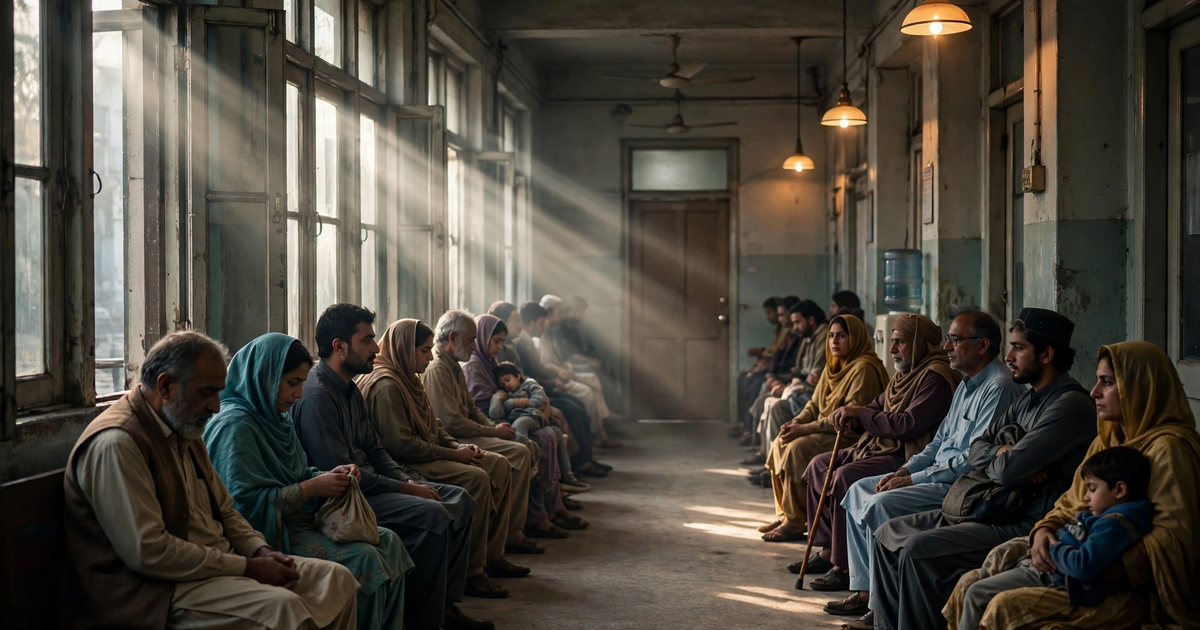
At 10 in the morning, Dr. Farhan's clinic in Rawalpindi is a pressure cooker. Mothers with feverish children rush in before school hours end, elderly patients arrive for their monthly BP checks, and the waiting benches are full by 10:30. At 7 in the evening, the same clinic feels like a different world: office workers in formal shirts, husbands bringing wives after dinner, a slower but steadier stream of new faces. The doctor, the room and the fee are the same — but the two sessions need completely different management.
Most Pakistani clinics run morning and evening OPDs with identical rules: same slot lengths, same staffing, same approach. That's why mornings descend into chaos while evenings leave the doctor exhausted by the last patient. Here's how to design each shift for what it actually is.
Two shifts, two different clinics
Before changing anything, understand who actually walks in during each session. The patterns are remarkably consistent across Pakistan.
The morning crowd: fast, familiar, family-driven
Morning OPD — typically 9 AM to 1 PM — belongs to housewives, children, and the elderly. Mothers come with sick kids before school or right after drop-off. Older patients prefer mornings because travel is easier and they avoid the evening rush. A large share of morning visits are follow-ups: sugar and BP reviews, dressing changes, "doctor sahab ne kaha tha ek haftay baad dikhana." These patients know the drill. They want to be seen, get their prescription, and leave. Walk-ins dominate, and the peak hits between 10 and 12.
The evening crowd: new faces, working patients, longer stories
Evening OPD — typically 5 PM to 9 PM — serves people who can't come during work hours. Office workers, shopkeepers who close at Maghrib, and families who come together after dinner. A much higher proportion are new patients: people who took the evening off work specifically to see this doctor. They've waited days for this appointment, they've rehearsed their symptoms, and they ask more questions. Evening consultations run longer — not because the doctor is slow, but because the cases are newer and the patients more invested.
There are seasonal and weekly variations too. In summer, evenings run heavier as people avoid the midday heat. Fridays need Jummah adjustments — many clinics close 12:30 to 2:30 or skip the morning session entirely. In Ramadan, the whole rhythm flips: light mornings, packed post-Iftar evenings. Your schedule should flex with these, not fight them.
Design slots per shift, not one-size-fits-all
The single biggest scheduling mistake is giving both shifts the same slot design. Here's a practical split.
Morning: protect throughput
Mornings are about volume and pace. Use two slot types: quick follow-ups at 5–7 minutes (BP check, sugar review, dressing change, report review) and new patients at 12–15 minutes. Train your receptionist to classify at booking — one question, "pehli dafa aaye hain ya checkup ke liye?" — decides the slot. Build in a 10-minute buffer every 45 minutes; without it, one complicated case at 10:30 backs up the entire morning. And stop issuing tokens 30 minutes before the session ends — the "just one more patient" at 12:55 PM is what turns a 1 PM finish into 2:15.
Evening: protect the doctor
Evenings need longer new-patient slots — 15 to 20 minutes — because working patients bring fuller histories and more questions. They've often seen another doctor first and want a second opinion, which takes time. The smart move is to cap total evening tokens lower than morning tokens, even though demand feels high. A doctor who sees 45 patients in the morning and then 40 in the evening will make poor decisions in the last hour — and patients can tell. Better to have a short evening waitlist than a burnt-out doctor at 9:30 PM.
The midday gap: close properly or stay open properly
The hours between 1 and 5 PM divide clinics. Some close completely — staff go home, the doctor rests. Others run a thin skeleton service. Both work; what doesn't work is the in-between, where the clinic is technically open but nobody answers the phone and the doctor is unreachable. If you close, put clear timings on the door, on Google, and on your WhatsApp auto-reply. If you stay open, keep one receptionist for phone bookings and emergencies. The worst outcome is a patient arriving at 3 PM to a locked door with no information.
Staff both shifts properly
A tired morning team running a tired evening session is where patient experience quietly dies.
Two teams beat one stretched team
If you run both shifts daily, you need overlapping — not identical — staffing. The receptionist who handles the 10 AM chaos should not be the same person handling the 8 PM billing queue, at least not every day. A common workable model: a core morning team (reception + dispenser), an afternoon gap with one person on phones, and an evening team that overlaps the last morning hour for handover. The evening shift especially needs a strong phone person — that's when appointment calls, "doctor kab ayenge?" queries and next-day bookings peak.
Do the rough math before adding a shift
A second shift isn't free. Roughly: an evening receptionist costs Rs. 30,000–45,000 a month, a dispenser or assistant another Rs. 25,000–40,000, plus electricity and generator fuel for 4 extra hours daily. Against that, an evening session of 25–30 patients at an average collection of Rs. 1,500–2,000 brings in Rs. 37,000–60,000 a day. Even at half capacity, the math usually works — but run your own numbers for a month before committing to the payroll. Track revenue per shift separately; most clinics are surprised which session actually earns more.
Protect the doctor's energy — it's the real capacity limit
Here's the uncomfortable truth: the binding constraint on your clinic's throughput is not rooms or staff — it's the doctor's decision quality. Research and plain experience agree that after 50–60 consultations in a day, judgment gets sloppy: histories get shorter, examinations get quicker, and the risk of missing something rises. Seeing 80 patients a day is not a badge of honour; it's a liability.
Design the day around energy, not just time. Put your hardest cases — new diagnoses, anxious patients, complex chronic reviews — in the first half of each session when focus is sharpest. Take a real break between shifts: not "resting" while answering calls, but an actual hour away from patients. Build prayer breaks into the schedule openly rather than letting them collide with a full waiting room. And never schedule chronic counselling or difficult conversations ("aap ko sugar ki dawa zindagi bhar khani hogi") as the last patient of a long evening — neither you nor the patient is at your best then.
Many experienced doctors find their sweet spot is 40–50 patients a day across both sessions with proper breaks. That's a full, profitable clinic — without the slow erosion of quality that drives patients to competitors.
Which shift should you grow?
Don't guess — measure. For 30 days, record two numbers per shift: patient count and total collection. Then compare. You might find the evening session sees fewer patients but collects more per patient (more new cases, more procedures). Or that the morning session is your volume engine but evening barely covers its costs. The answer decides where to invest: extend the strong shift by 30 minutes, add a second room for the busy one, or fix the weak one — maybe it just needs better phone handling or clearer timings online.
Also watch the calendar. School holidays shift morning patterns. Summer pushes volume to evenings. Wedding season and Muharram slow everything. A schedule that flexes with Pakistan's real rhythms will always beat a rigid one.
How Clendra helps
Clendra is built for clinics that run real, messy, two-shift days. Shift-wise scheduling lets you set different slot lengths and token caps for morning and evening sessions, so the design above becomes the system instead of a whiteboard note. Daily reports break down patients and revenue per shift, answering the "which shift earns more?" question in seconds. And token management keeps both sessions flowing without the paper slips and shouting across the waiting room. See how it works or get early access.
Frequently asked questions
Should morning and evening consultation fees be the same?
Most clinics keep one fee for both sessions — it's simpler and avoids the perception that evening patients are being charged a premium for the doctor's inconvenience. If your evening session offers something genuinely extra, like guaranteed shorter waits, a small difference is defensible, but display it clearly on your fee board.
What are the best OPD timings in Pakistan?
The most common pattern is 9 AM–1 PM and 5 PM–9 PM, and it works because it matches patient life: school hours in the morning, office hours in the evening. Adjust for your area — markets that close late may need a later evening start, and hospital-adjacent clinics often do well with a 10 AM start.
How many patients per hour is reasonable?
For a GP with mixed cases, 6–8 patients an hour is sustainable; specialists with longer consultations should plan 4–6. Mornings can run slightly faster (more follow-ups), evenings slightly slower (more new patients). If you're consistently above 10 an hour, quality is suffering even if nobody complains yet.
Should the clinic stay open between morning and evening sessions?
Either close cleanly or staff properly — the middle ground fails. If you close, communicate timings everywhere: door, Google profile, WhatsApp auto-reply. If you stay open, keep at least one person on phones and a doctor reachable for genuine emergencies.
How should I adjust timings for Friday and Ramadan?
On Fridays, most clinics either close 12:30–2:30 for Jummah or skip the morning session and run a single evening OPD. In Ramadan, expect light mornings and heavy post-Iftar evenings — many clinics shift to a single 8 PM–11 PM session. Announce changes a week ahead on WhatsApp and at the reception desk.