
Every pediatrician knows the sound: a child screaming in the waiting room twenty minutes before their appointment, escalating with every passing minute, until by the time they're called in, the child is in full meltdown, the mother is embarrassed and defensive, the doctor is behind schedule, and the next six patients are all staring. The appointment that should have taken ten minutes takes thirty — and the whole OPD runs late.
Here's the uncomfortable truth: most of that chaos is a scheduling problem, not a child problem. Anxious children aren't randomly distributed through your day — you can predict which appointments will be difficult, sequence them intelligently, and design the experience so fear never gets the chance to build. A pediatric OPD that runs on time with calm children isn't luck. It's engineering.
Sequence the day around anxiety, not arrival order
The standard token system — first come, first served — is the worst possible sequencing for anxious children. A fearful child who arrives early and waits 45 minutes isn't "settling in"; they're marinating in dread, listening to other children cry, and working themselves into a state no doctor can easily reverse.
Anxious children go first or last — never in the middle
Flag anxious patients in your appointment book (a simple star or note: "fearful — 4yo"). Book them as the first appointment of the session, when the waiting room is empty and quiet, or the last appointment, when there's nobody behind them and the doctor isn't watching the clock. The middle of a busy OPD — noisy, crowded, full of crying — is the worst slot for a fearful child. Parents of anxious children will happily take a 9 AM or a 9 PM slot if you explain why: "Aap bache ko sab se pehle le aain, rush se pehle, taake wo araam se check ho."
Separate procedures from consultations
Vaccination and blood-draw appointments generate the most anxiety — and the most waiting-room crying, which terrifies the children waiting for routine checkups. Where possible, cluster procedures in a dedicated time block (or a separate room) so the consultation queue stays calm. A child waiting for a growth check shouldn't have to listen to twenty minutes of injection screams.
Buffer time is not wasted time
A schedule with zero slack assumes every child cooperates. Children don't. Build 5-minute buffers after every 3–4 appointments — invisible to patients, visible in your book as slightly longer slots for flagged cases.
Give fearful children longer slots
A routine follow-up takes 8 minutes for a calm child and 20 for a terrified one — the extra time goes to letting the child settle, showing them the stethoscope, examining the teddy bear first. If you book the fearful child in a standard slot, you steal time from every patient after them. Book them for 20 minutes, tell the parents to arrive 10 minutes early, and watch your OPD stay on time.
Protect the doctor's reset moments
After a genuinely difficult appointment — a screaming toddler, a distressed parent — the doctor needs two minutes before the next patient. Back-to-back scheduling with no recovery turns one bad appointment into a bad hour. Those micro-buffers are the cheapest stress management a clinic can buy.
Parent communication starts before the visit
Half of a child's anxiety is inherited from the parent's anxiety, and the other half comes from not knowing what will happen. Both are fixable before the family leaves home.
Tell parents exactly what to say (and not say)
When booking an anxious child's appointment, give the parent a 30-second script: "Bache ko batayen ke doctor sahab sirf dekhenge, koi injection nahin lagega" (when true — never lie). Tell them what NOT to say: no "agar roye to injection lag jayega" threats, no "darna mat" lectures that confirm there's something to fear. Parents who've been told "don't say the word injection" arrive with calmer children. This one habit, repeated at every booking, transforms your patient population over months.
Confirm and prepare the day before
A reminder message the evening before does double duty: it reduces no-shows and lets you add the preparation note — "Kal 10 baje ka appointment hai. Bache ko khana khila kar laain, aur usay batayen ke doctor uncle/aunty sirf check karengi." A prepared parent is a calm parent, and a calm parent is half the battle. Pair this with your vaccination reminder system for procedure visits.
Design the waiting room for small nervous humans
Your waiting room is where anxiety builds or dissolves. Most clinic waiting areas are designed for adults who happen to have children — flip that.
A corner is enough
You don't need a playroom. A defined children's corner — a small rug, a low table with crayons and paper, a few washable toys, picture books — signals to children that this place expects them and likes them. Keep it visible from the seating so parents can supervise, and clean the toys daily (parents notice hygiene instantly).
Control the sensory environment
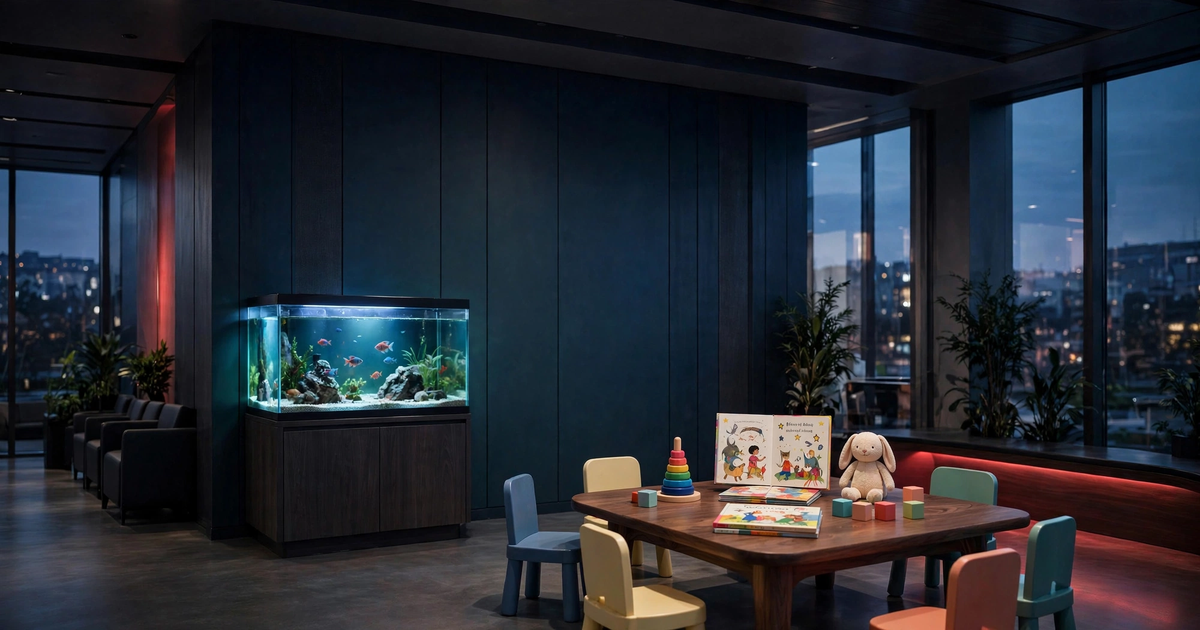
Loud TVs playing news channels raise everyone's stress, children included. Play soft cartoons or rhymes at low volume, keep lighting warm rather than clinical-white, and if possible, keep the children's corner slightly separated from the main seating so a crying child doesn't set off the whole room. A small fish tank — the cliché exists because it works — gives anxious children something to stare at besides the door to the doctor's room.
Never let the queue become a crowd
A waiting room packed with 15 families is frightening for a 4-year-old. Stagger appointments so no more than 6–8 families wait at once, and have the receptionist proactively manage overflow — "Aap thori dair bahar walk kar lein, hum call kar lenge jab number qareeb ho." A short walk beats 40 minutes of fluorescent-lit dread.
Handling meltdowns without derailing the OPD
Despite everything, meltdowns happen. The goal isn't zero crying — it's containing the disruption so one child's bad ten minutes doesn't cost you the whole session.
The pause-and-reset rule
Train your staff and yourself: when a child is in full meltdown, stop pushing. Give the parent two minutes in a quiet corner to calm the child — offer water, let them step outside. Forcing an examination on a screaming child produces garbage clinical findings anyway (good luck hearing a heart through screaming) and traumatizes the child for the next visit. The two minutes you "lose" now save you twenty minutes of repeat-visit fear later.
Never shame the parent
The mother's embarrassment is already at maximum; a sigh, an eye-roll, or "control your child" from staff turns a stressed parent into an angry ex-patient. The script is: "Koi baat nahin, bache aise hi hote hain. Aap araam se bitha lein, hum 5 minute baad bula lenge." Kindness in the meltdown moment is what parents remember — and what they tell other mothers.
Debrief and rebook smartly
After a meltdown visit, note what triggered it and plan the next appointment around it: first slot, longer time, parent prepped with the script. "Agli dafa hum subah sab se pehle bulaenge taake bacha fresh ho" shows the parent you're on their team. Parents of difficult children are fiercely loyal to clinics that handle their child with grace — they become your loudest referrers.
How Clendra helps
Clendra's scheduling lets you flag anxious patients, auto-assign them first or last slots, and build buffer time into the day without thinking about it. Parent reminders go out with your preparation notes attached, and the day's sequence is visible to the whole team. See how it works or get early access — and explore our pediatric clinic features.
Frequently asked questions
Should anxious children be scheduled first or last?
Either — first, when the waiting room is empty and quiet, or last, when there's no queue pressure behind them. Never in the middle of a busy OPD. Ask the parents which suits them and explain why you're offering it; they'll appreciate the thought.
How much buffer time should a pediatric OPD have?
Build 5-minute buffers after every 3–4 appointments, and give flagged anxious children 20-minute slots instead of the standard 8–10. The buffers are invisible to patients but keep the whole session on time.
What should I tell parents before an anxious child's visit?
Give them a short script: tell the child the doctor will only look (when true), never threaten with injections, and avoid "don't be scared" lectures. Send it with the appointment reminder the evening before so it arrives when they're preparing the child.
How do I stop one crying child from upsetting the whole waiting room?
Cluster procedures (vaccinations, blood draws) in a dedicated time block or separate room, keep the children's corner slightly separated from main seating, and stagger appointments so the waiting room never becomes a crowd.
What should staff do during a full meltdown?
Pause, not push. Give the parent a quiet corner and a few minutes — forcing an exam on a screaming child gives useless findings and deepens the fear. Never shame the parent; note the trigger and rebook the next visit as a first-slot, longer appointment.